
Sex Offender Checks in Lamb County
The Texas Public Sex Offender Registry is the primary route for Lamb County records. Texas DPS runs the free service under Code of Criminal Procedure Chapter 62. It offers a name search, address and geographic tools, a county filter, and map or list views. The county does not publish a separate offender list or local registry app. That makes the state system the best first stop for a current public search.
Registration work is local even though the public list is statewide. A person who lives within a city generally reports to that city's police department. A person outside a municipality generally reports to the Lamb County Sheriff's Office. The official Littlefield government directory and Olton Police contact page identify city routes, but the DPS registry remains the public county-wide search. Searchers should not assume every Lamb County address was registered at the jail. Use a full profile to compare aliases, physical traits, offense facts, and status before treating two similar names as the same person.
The public-law source behind Lamb County registry access appears in the Texas Government Code criminal-history provisions.
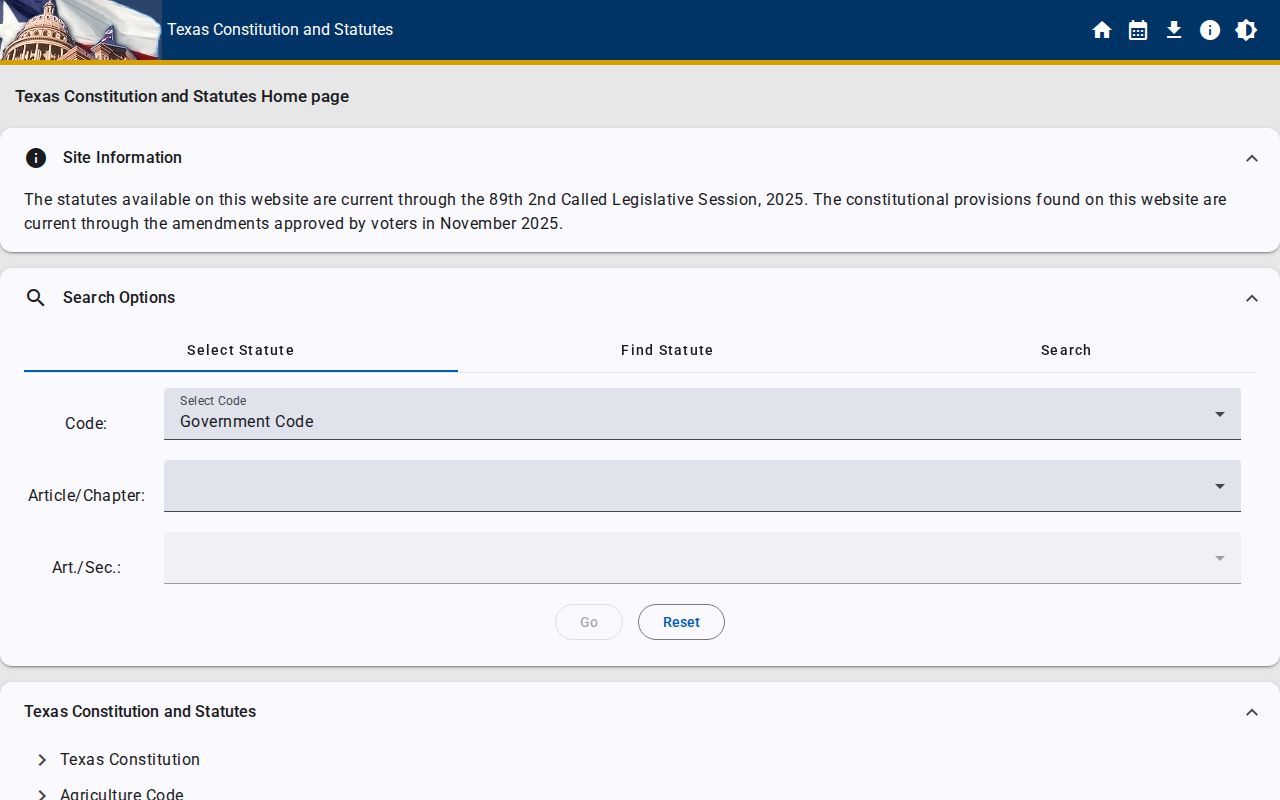
That source helps distinguish the registry's special public rules from the more limited disclosure rules for other criminal-history data.
Lamb County Registry Map Search
A place-based search answers a different question than a name query. Select Lamb in the county control to scan listed registrants across the county, or enter an address, city, or ZIP code for a geographic view. The radius control can focus an address search, but its live choices may change. Map view shows spatial context, while list view makes names and profiles easier to compare. Neither view proves that a person is at a reported address at a given moment.
Address results should be read with care. A registry address is a reported public field, not a custody tracker or court docket. If a profile appears stale, note its verification status and contact the responsible registering authority. City police handle most city residents; the sheriff handles many people outside city limits. Do not confront the listed person or a current occupant. A safe response is to report the possible mismatch for official review.
Note: A map pin supports a location search, but it does not replace the profile's identity, status, and verification fields.
How to Search the Texas Public Sex Offender Registry
Start with the narrowest facts that are known. A name is useful for a specific person. A county, city, ZIP code, or street location is better for a community-area check. Read the conditions of use before searching, then compare the result list against more than one identifier. An alias, allowed birth detail, physical description, or photograph can prevent a false match.
- Open the official Texas DPS registry and choose a name, address, county, or map search mode.
- Enter the known fields, or select Lamb from the county list and choose map or list view.
- Review possible matches by name, alias, photo, location, and physical description.
- Open the full profile and read the offense, risk, registration, verification, and duration details.
| Field or Control | Type | How It Helps |
|---|---|---|
| Search mode | Tabs | Switches among name, address, and geographic routes |
| Last and First Name | Text | Last name begins a person search; first name narrows results |
| Address, City, ZIP | Text | Finds listings tied to a place |
| County | Dropdown | Select Lamb for a county-wide result set |
| Radius | Dropdown | Narrows an address route; confirm current live choices |
| Map, List, Search, Clear | Controls | Changes the view, runs the query, or resets it |
The registry search should be treated as the direct source. The wider Texas registration statute explains who must register and what may be public.
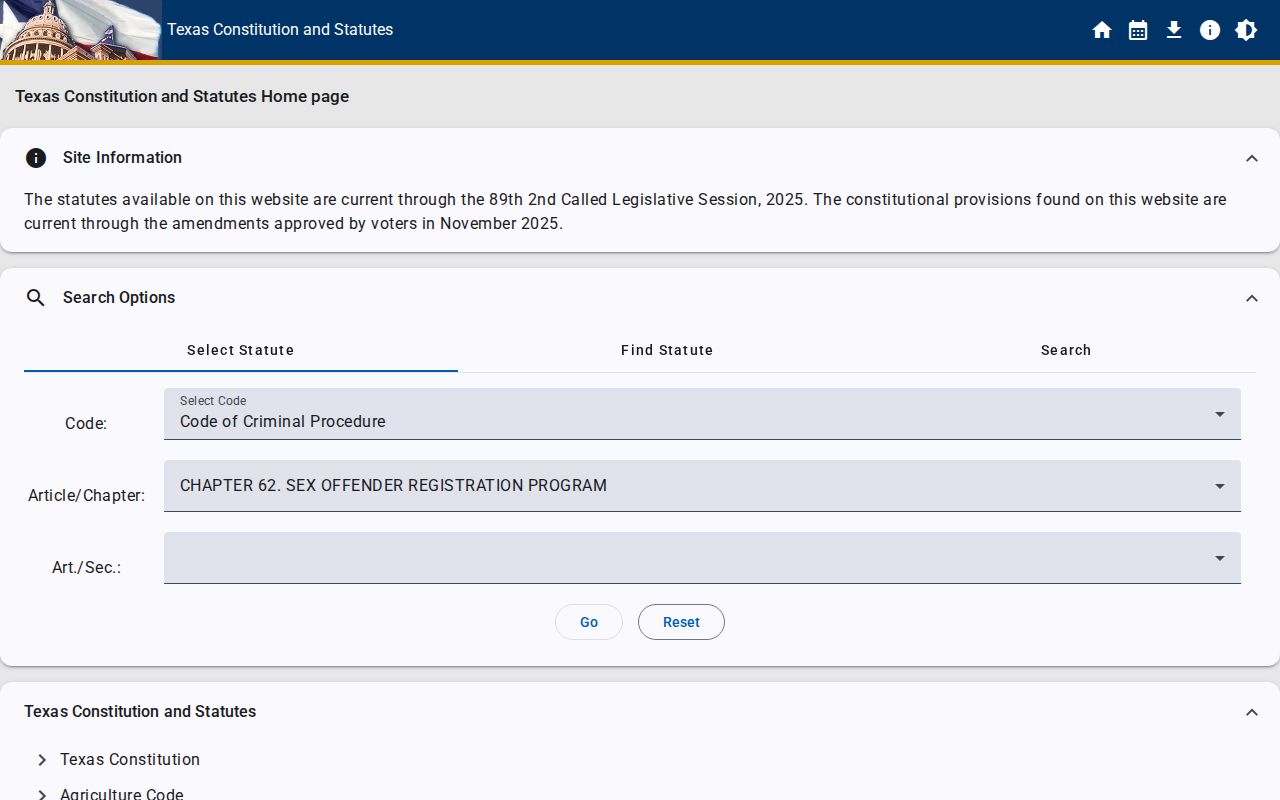
The law supplies the framework, while the DPS profile supplies the public facts for a particular match.
Lamb County Name and Map Results
Name and map tools overlap, but they are not interchangeable. A name search can find a person whose reported location is not already known. It can also surface aliases. A map or county search begins with place and can reveal listings near a Lamb County location even when no name is known. List view is well suited to reading several result summaries; map view is better for geographic context.
For an out-of-state connection, use the National Sex Offender Public Website. NSOPW is the official federal search layer across participating jurisdictions. It does not turn the Texas record into a national criminal-history report. Return to the Texas DPS profile for the state's detailed public fields, and check another state's official registry when the national result points there.
Note: NSOPW broadens the geographic search, while Texas DPS remains the direct source for a Lamb County registry profile.
Inside a Registry Profile
A Texas profile contains more than a name and photograph. Its identity block may include aliases, allowed age or birth data, sex, race, height, weight, eye and hair color, and scars, marks, or tattoos. Location and registration fields can show the reported residential place, status, verification information, and whether the duty has an end date or lasts for life. Authorized vehicle or campus information may also appear.
| Identity | Name, aliases, allowed birth detail, sex, race, and physical description |
|---|---|
| Photograph and Marks | Public photograph plus listed scars, marks, or tattoos |
| Location | Public residential location and authorized campus details when applicable |
| Qualifying Offense | Offense, statute, conviction or adjudication details, and victim age category without identity |
| Risk Information | Texas risk level and any related public notice status |
| Registration | Verification status and an end date or lifetime designation |
| Other Public Data | Authorized vehicle information when included by law |
Read the offense and status fields together. Risk level speaks to an assessment, while duration follows the qualifying statute and history. A profile is not a full court file. For filed charges, pleas, or sentencing documents, the county's criminal court case route serves a different record need.
Lamb County Registry Profile Limits
The public view excludes sensitive fields. It does not publish a victim's identity, Social Security number, driver's-license number, phone numbers, online identifiers, employer data, or facts DPS marks confidential. Victim age category may appear because it helps describe the qualifying offense without naming the victim. That line protects a real person and should never be used to infer or seek the person's identity.
The data collected by DPS and the local registering authority is broader than the public subset. Officials may hold fingerprints, contact facts, supervision information, and other registration material that does not appear online. A missing field is not proof that the agency never collected it. Public access depends on Chapter 62 and related confidentiality rules, not on whether a searcher would find a field useful.
The statewide reporting framework is set out in Code of Criminal Procedure Chapter 66.
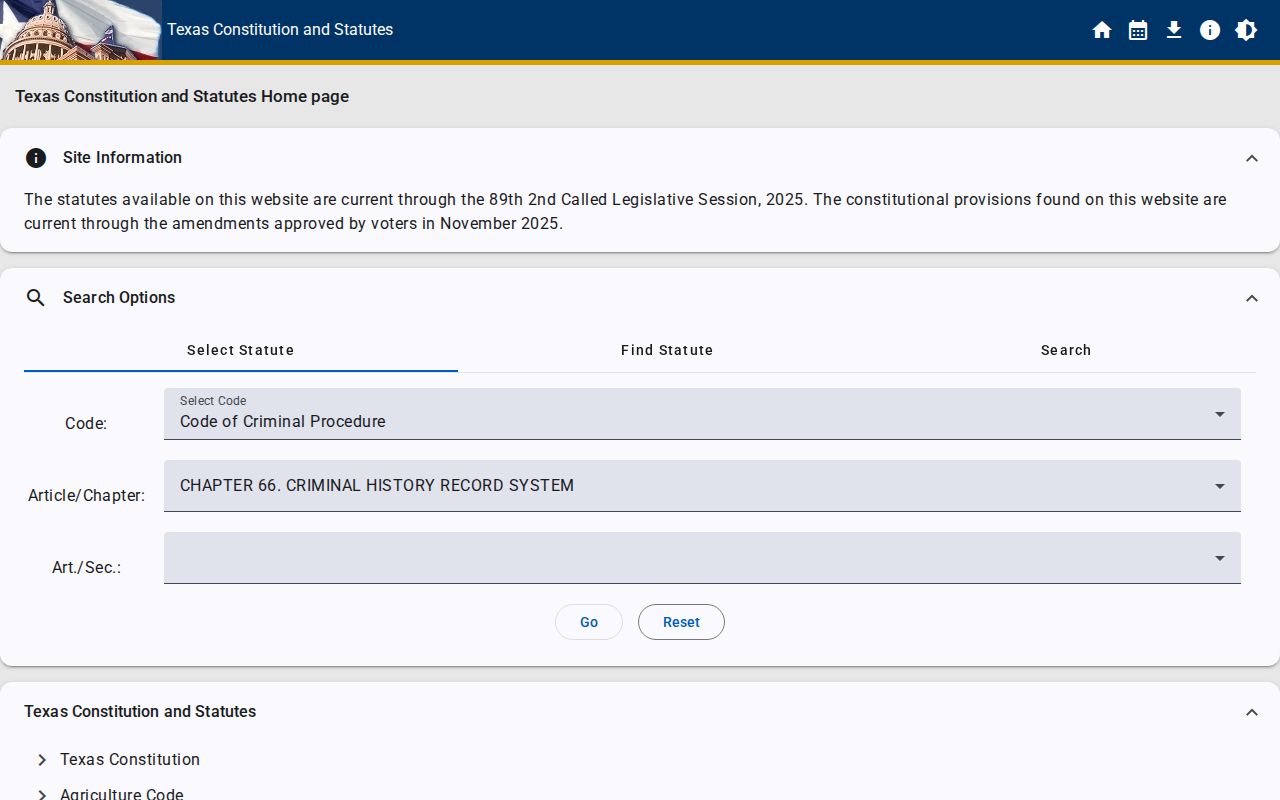
Reporting law helps explain why a registry listing, a court case, and a broader criminal-history record are related but distinct records.
Texas Registration Levels and Requirements
Texas uses risk levels to describe an assessed chance of continued danger. Level 1 is low, Level 2 is moderate, and Level 3 is high. A civilly committed sexually violent predator is part of a separate civil program. These labels are not the same as federal SORNA tiers. More important, the Texas level does not by itself set how long registration lasts. The offense statute and registration history control duration.
| Texas Category | Plain Meaning | Duration and Notice |
|---|---|---|
| Level 1, low | Low danger; not likely to continue | Offense statute controls duration |
| Level 2, moderate | Moderate danger; may continue | Offense statute controls duration |
| Level 3, high | Serious danger; likely to continue | Enhanced public notice may apply |
| Civil commitment | Sexually violent predator civil program | Separate from federal SORNA tiers |
Registration includes ongoing duties to give required facts and keep them current with the responsible authority. The public only sees the part authorized by law. Texas punishment classifications are set out in the Penal Code punishment chapter, a separate source from the risk-level labels.
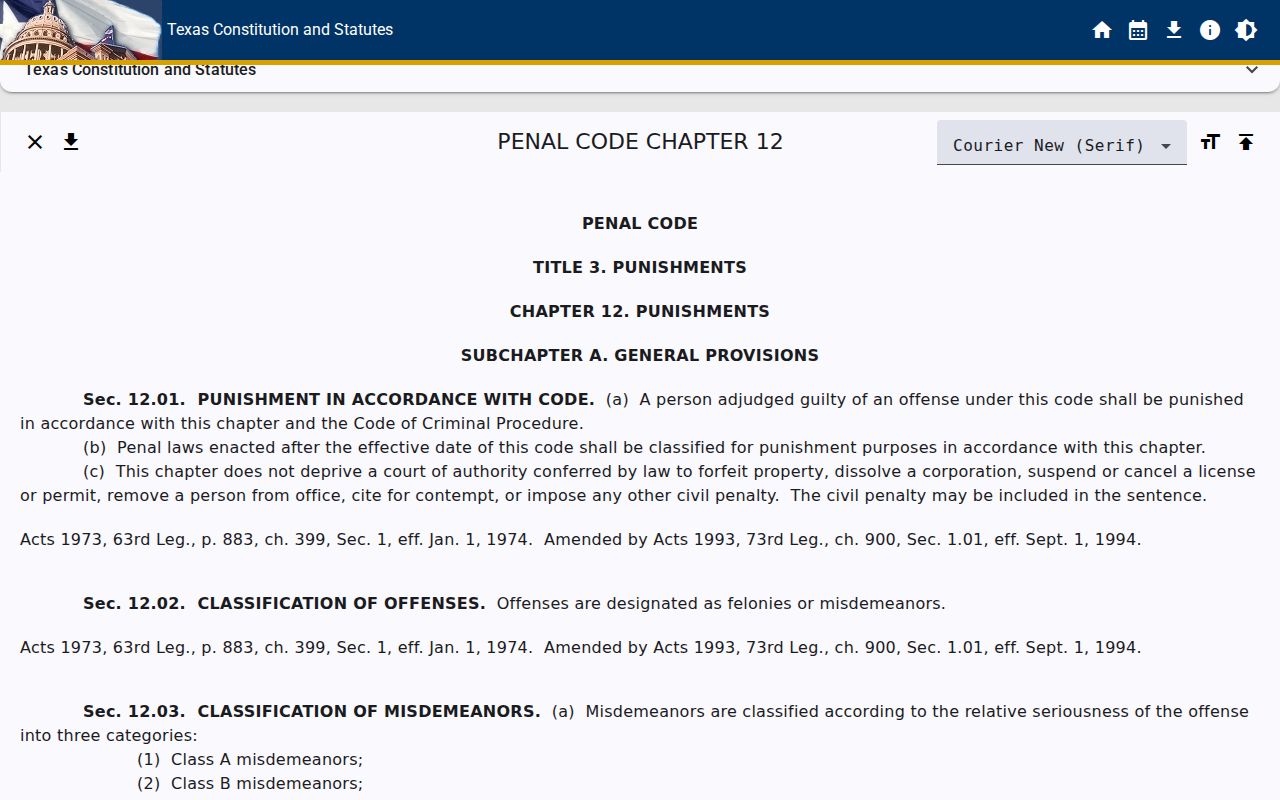
The distinction matters because a profile's risk category, qualifying offense, and court punishment answer three different questions.
Lamb County Registration Duration Rules
Adult registration is generally for life or for ten years measured from the latest statutory discharge, release, or supervision event. Enumerated sexually violent offenses and repeat or other qualifying offenses can carry lifetime duties. Juvenile adjudications commonly use a ten-year calculation after disposition or completion, subject to the statute and court orders. A person cannot determine the term from the risk label alone.
Read the profile's end-date or lifetime field, then use the offense statute when a legal calculation matters. A listed date may also depend on the latest of several triggering events. Public searchers should not recalculate a person's duty from a news account or charge label. Questions about an official registration record belong with the responsible registering authority or the DPS Sex Offender Registration Unit.
Note: Texas registration length follows the governing offense and statutory timeline, not a simple Level 1, 2, or 3 chart.
Community Notification and Lawful Use
Community notice may occur through the public registry, local registers, permitted publication, and English and Spanish postcards. DPS uses enhanced postcards when it learns that a high-risk registrant or a civilly committed predator will move into a community. The DPS registration program overview explains the state's public-notification role.
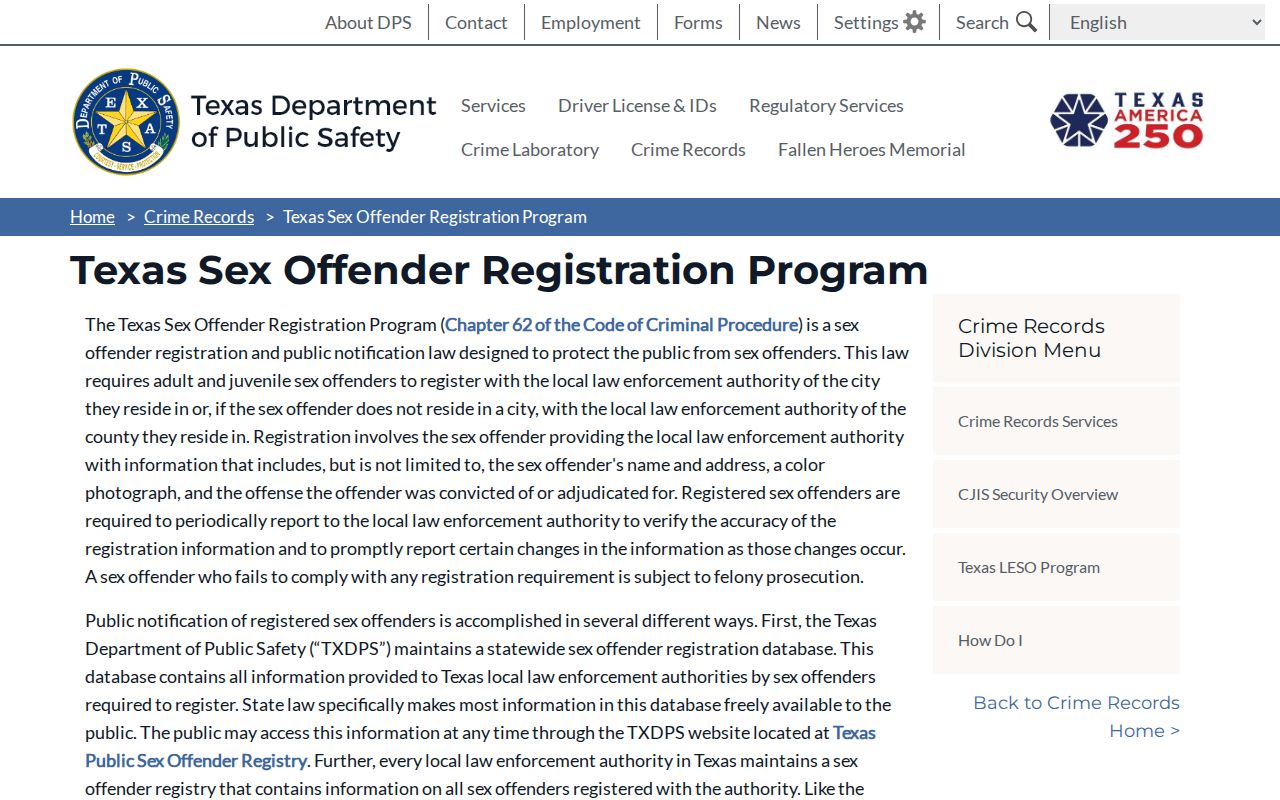
That official program page places map access and community alerts within a safety process led by public agencies.
Registry misuse warning: Code of Criminal Procedure Article 62.005 warns that registry information may not be used to injure, harass, or commit a crime against a listed person. Misuse can lead to criminal prosecution or civil liability.
Use the listing to make informed safety choices and to send suspected noncompliance to officials. Never threaten, publish private speculation, damage property, or organize a confrontation. The registry gives public facts under a defined law; it does not transfer police powers to the reader.
Report Lamb County Registry Concerns
If a Lamb County profile appears to show an old address or another possible violation, save the public facts that prompted concern and contact the authority responsible for that location. City police generally receive registration for city residents. The Lamb County Sheriff's Office is the route for people outside municipalities. The DPS Sex Offender Registration Unit can be reached at (512) 424-2800 for program questions.
Give a clear description of the possible mismatch. Include the profile name, reported location, status field, and what was observed without adding rumor. For an immediate threat, call 911. For a nonurgent compliance issue, let police, the sheriff, or DPS verify it. This approach protects the public, avoids a false accusation, and keeps enforcement with trained officials.